

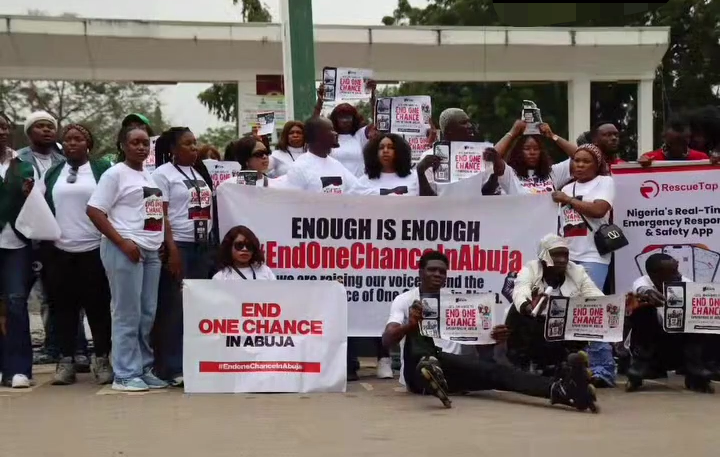
Abuja youths protest today in a dramatic public display of frustration and fear over the persistent “one-chance” menace; a criminal tactic where perpetrators masquerade as drivers or passengers to abduct, rob, or harm unsuspecting commuters.
The march is to show the widespread concerns over safety and enforcement gaps along the Federal Capital’s transport routes.
Since 2015, Human Rights Writers Association of Nigeria (HURIWA) has documented over 100 such incidents in Abuja, with victims often suffering severe physical and financial trauma.
The group has urged the Federal Capital Territory Administration (FCTA) to implement stronger countermeasures, including vehicle profiling, digital monitoring of commercial drivers, and dedicated oversight teams.
The FCTA has responded in recent years with operations aimed at disbanding illegal motor parks and clamping down on suspicious taxis.
Efforts intensified notably during the festive season, with multiple vehicles impounded and arrests made, as officials warned “one-chance” syndicates to vacate the streets—and emphasized vigilance by commuters.
Residents have commended these steps, recognizing them as essential in restoring confidence in Abuja’s transportation system.
Yet, despite these efforts, recent tragedies have reinforced citizens’ fears.
Over the summer, several women, including a petrol station attendant and a staffer from the Ghanaian High Commission, lost their lives in “one-chance” incidents, where they were abducted, assaulted, or thrown from moving vehicles.
While the FCTA and police forces have shown willingness to act, this protest underscores the need for a comprehensive and sustained strategy including digital vehicle registration, regular enforcement, better lighting and patrol on key roads, and accessible complaint systems for commuters.