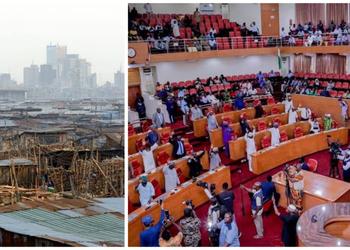


A recent development within Nigeria’s economic management team followed tense exchanges at the National Assembly of Nigeria, where lawmakers questioned the slow release of funds for capital projects captured in the federal budget.
The situation placed scrutiny on the roles of Wale Edun, Doris Uzoka-Anite, and other members of the government’s economic team under Bola Ahmed Tinubu.
The controversy emerged during oversight hearings and budget defence sessions at the House of Representatives, where lawmakers demanded explanations for what they described as near-zero releases of capital funds to Ministries, Departments and Agencies (MDAs).
During a committee session in Abuja in late February 2026, Finance Minister Wale Edun appeared before lawmakers to defend the government’s fiscal performance. The hearing focused on the implementation of the 2025 budget, especially the capital component meant for infrastructure and development projects.
Members of the House committee noted that the National Assembly had previously approved ₦1.15 trillion for specific capital projects, yet many ministries reported receiving little or no funding.
When questioned about the delay in releasing the funds, Edun acknowledged that capital releases had been slow but insisted the government was avoiding unsustainable spending practices.
According to him, the administration was determined not to return to excessive borrowing or money printing to fund government expenditure.
He explained that Nigeria had inherited significant fiscal liabilities, including about ₦152 trillion in naira-denominated debt, partly caused by exchange-rate adjustments and previously unrecorded financial obligations.
Edun told lawmakers that although there were approved payment warrants for capital projects, the government had to ensure that funding sources were available before releasing the money.
He stated that the government could not “go back to spending money we don’t have,” warning that such practices had triggered economic crises in other countries.
However, the explanation did little to calm lawmakers, who argued that improved government revenue should have translated into visible capital spending.
Another issue that intensified tensions at the hearing was the absence of the Minister of State for Finance, Doris Uzoka-Anite, whom lawmakers believed should have provided technical explanations on the disbursement process.
During the session, Edun reportedly shifted responsibility for detailed explanations of capital disbursements to his Minister of State, stating that she handled the operational aspects of releases.
Because Uzoka-Anite was not present at the initial hearing, lawmakers adjourned the session and summoned her to appear the following day to clarify the matter.
The committee reconvened on February 26, 2026, and the minister appeared before the panel after the recall.
When Uzoka-Anite eventually appeared before the committee, she confirmed that the ₦1.15 trillion approved by the National Assembly for capital projects existed, but she explained that funds could not be released immediately because certain procedural conditions had not been met.
According to her, several “pre-disbursement conditions” must be fulfilled by ministries before funds can legally be released. These conditions include:
Completion of project documentation
Finalisation of procurement processes
Submission of feasibility and technical reports
Compliance with government approval and sign-off protocols
Without meeting these requirements, she explained, the Treasury could not lawfully disburse the funds.
Despite the explanation, lawmakers expressed dissatisfaction and asked the minister to identify any ministry that had met all the required conditions but still did not receive funding. She reportedly could not name a specific case, which further deepened the committee’s concerns.
Amid the controversy and growing scrutiny from lawmakers, the administration carried out an adjustment within the economic team.
Under the new arrangement:
Doris Uzoka-Anite was redeployed to the Ministry of Budget and Economic Planning as Minister of State.

Taiwo Oyedele, a tax policy expert and chairman of the Presidential Committee on Fiscal Policy and Tax Reforms, was nominated as Minister of State for Finance.
Wale Edun remains the Coordinating Minister of the Economy and Minister of Finance.
The move is widely interpreted as an attempt by the government to strengthen coordination between fiscal policy, tax reforms, and budget implementation.