

Nigeria’s kidnap-for-ransom economy has reached alarming levels, with citizens paying a record ₦2.56 billion in ransom between July 2024 and June 2025, according to a report by SBM Intelligence.
This figure marks a staggering 144% increase from the ₦1.05 billion paid in the same period the previous year.
Key Statistics
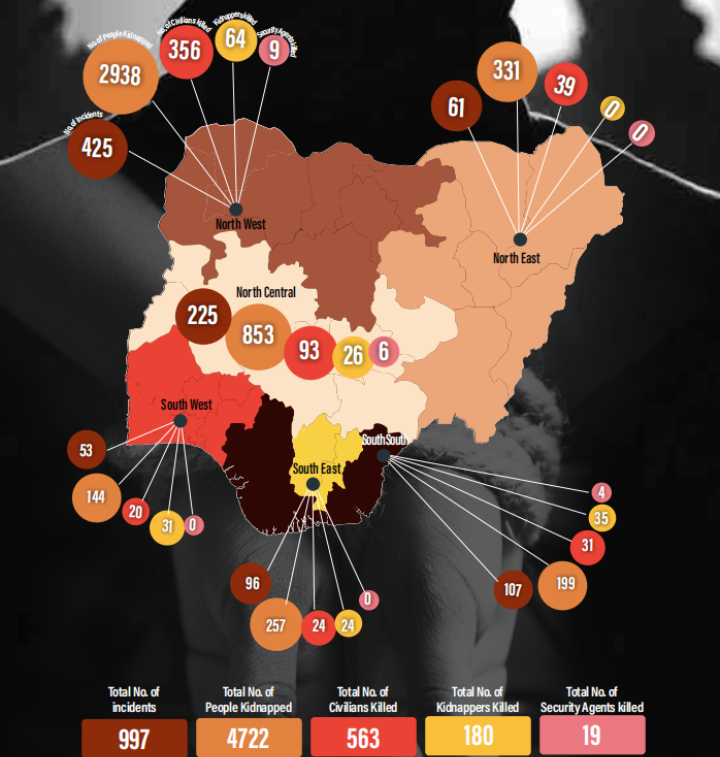
4,722 Nigerians were kidnapped in 997 separate incidents, resulting in 762 deaths linked directly to abductions.

Kidnappers demanded an estimated ₦48 billion in ransom, though only 5.35% of that amount was paid.
The Northwestern region remains the epicentre of the crisis, contributing 62% of total victims with Zamfara, Kaduna, and Katsina leading in abduction figures. Inextricably tied to insecurity, these areas are severely impacted.
The rapid devaluation of the naira and rising inflation have pushed ransom demands higher in local currency.
Though total payments ballooned in naira terms, the dollar equivalent increased only modestly—from about $655,000 in 2024 to $1.66 million in 2025
Shock waves from high-profile abductions continue to impact national discourse. For example, the kidnapping of Justice Haruna Mshelia in Borno resulted in a ransom of ₦766 million, nearly 30% of all ransom payments collected nationwide.
Disturbingly, groups like Boko Haram have profited from these payments, reportedly receiving about one-third of all ransom proceeds which shows how kidnapping is also a funding method for insurgents rather than merely a criminal enterprise.
Meanwhile, everyday Nigerians bear the economic burden. Ransoms often wipe out savings, force families into debt, and drive community-driven crowdfunding, further depleting fragile safety nets.