

Six years after the world reopened, COVID- 19 might seems as a closed chapter, a painful but temporary disruption. But in reality, the pandemic did not really end. It restructured society.
COVID-19 did not just shut down economies or kill people, it created economic class and new way that it shifted power through remote work, and also permanently altered how a generation learns and earns.
In this 2026, the real story is not about recovery, but who recovered and who did not.
The New Poor—The Economic Aftershock
COVID created a situation and category of people who were not poor before the pandemic but they never fully recovered after it.
Some business owners who emptied savings just to survive with families during lockdowns, so also some private school teachers who were laid off but never rehired after the lockdown.
Informal workers and Artisans whose customer base collapsed
These are not the traditionally poor people, but the new poor, whose living lively turned to one emergency away from total collapse In Nigeria, currency devaluation, inflation and rising in energy costs have deepened this reality.
So many families who once managed school fees, rent, feeding and healthcare now rely on borrowing, digital lending Apps, cooperative loans with crushing interest rate What really makes poverty dangerous is in its invisibility.
This type of households are often excluded from benefiting from social welfare, because they do not look poor enough on paper, yet they are sinking faster than those already at the margins.
COVID did not just increase poverty, it reshaped the way it seems, turning most stability into a temporary privilege rather than a guarantee.
Remote Work Change Power
While lots of millions fell into uncertainty economically, another set of people gained power, which are the remote workers.
COVID broke the monopoly of geography and location, a single laptop with a stable internet and digital skill is what its needed, it became more valuable than physical office.
A graphics designer living in Lagos could earn in dollars. A software tester in Edo could work for a company in Canada.

For so many people, the COVID pandemic unlocked economic mobility Nigeria’s system was not aware of. This shift also created a new inequality.
People with good electricity, devices, skills and digital exposure were rewarded by remote jobs, while excluding those without them.
It shows and widened the gap between the rural and urban, connected and disconnected, educated and illiterate or untrained.
However, one of the most important things was that, it shifted power away from the employers and government.
Workers with global options became harder to control, also salaries decoupled from local economies. Loyalty weakened. Opportunity also became portal.
COVID did not just introduce remote work, it also changed work narratives, refined who holds leverage in the labor market and why remains trapped
Education After COVID—The broken Classroom
The most enduring damage of COVID lies in education.
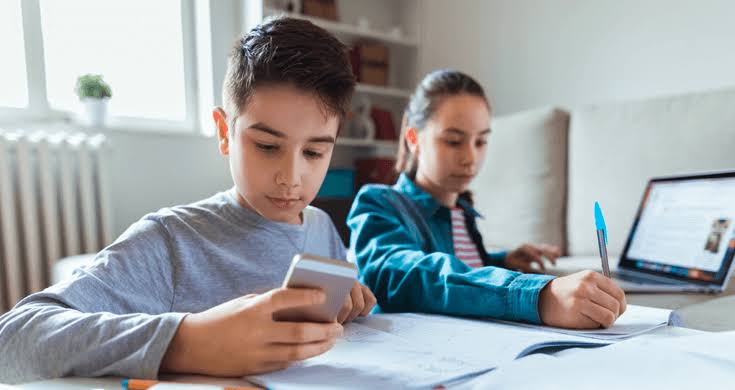
For few years, students lost structured learning, online education exposed Nigeria’s division and class, some children attended Zoom classes while others were sent home indefinitely. Many never returned after COVID .
In 2026, the consequences are visible, some graduate struggle with critical thinking, basic writing and numeracy.
Lecturers also complain of declining attention spam, while Employers lament of “Certificate without competence”. The system learned the long lesson.
Instead of fixing infrastructure, redesigning curricula and retraining teachers, many institutions just simply returned to the told method, pretending as if the disruption never happened.
The result is a generation caught in between outdated classrooms and a rapidly evolving digital economy.
COVID did not just interrupt education system, it also showed and exposed how fragile and unprepared the system was and how little has been done since.
COVID Didn’t End — It Reordered Society
In 2026, COVID should no longer be discussed as a health crisis. It is now a social and economic fault line. It created new poverty without safety nets.
It shifted economic power to those who could go remote. And it broke an education system already under strain.
The real question is no longer how the world survived COVID – but whether our policies, institutions, and leadership have caught up with the world COVID created.
Because the pandemic may be over, but its consequences are just getting started.